Growing up, I remember Noah by Ellen Gunderson Traylor sitting on our shelf waiting for me to pick it up. It always interested me but for one reason or another I always found myself getting distracted with some other reading. Well, during these past rainy weeks, I finally read it! And what an appropriate choice for such weather, might I add.
This novel is a very fictionalized retelling of the classic biblical account of Noah. The author took many liberties with what a pre-flood world would have looked like (even graciously warning those more hesitant readers that this is obviously a work of fiction and not claiming to be a historical or religious account, which I thought was a unique forward).
For example, Genesis mentions a group of beings called the Nephilim as being "the mighty men who were of old, the men of renown" (Gen. 6:4). Such references are short and there is still much mystery as to what they were like. Traylor imagines them as the inspiration for the gods of Olympus - in fact, Poseidon is a main antagonist. Or Traylor's imagining of life immediately after the flood. Noah's family fears once they noticed they were aging faster than normal (what?! age spots on 400 year old skin? that shouldn't show up for another 300 years!). I thought these little additions were quite creative.
The plot is mainly the same as the biblical narrative: God warns Noah of an impending flood, showing His wrath for sin. Noah and his family will be spared, not because they were sinless, but because God was showing his grace. I was surprised that the theology behind the original account was the same in the novel. Traylor took many liberties, but the main point behind the story was not muddled in any glaring ways.
At times the writing moved a little slow - trying to fit in the life's work of someone who reached the age of 950 was no easy task, I'm sure. But the plethora of so many interesting details kept me reading. I loved having the lives and characters of Noah and his family fleshed out, and adding that extra layer of human emotion to such a stoic tale was really neat.
Tuesday, August 26, 2014
Thursday, August 14, 2014
The Scorch Trials
I've been trying to decide for a while now if I liked The Scorch Trials by James Dashner better than The Maze Runner (first one in the series). And at long last, (get ready to get disappointed) I still can't because they are so different. The tag line on the cover says it best: "The maze was only the beginning".
Spoiler alert: Recapping the plot may in fact be a spoiler in itself if you haven't finished the first book...ye be warned.
The Scorch Trials picks up right where The Maze Runner left off. Phase two: The Scorch. (Sounds lovely, right?) At first I was a little let down because I had really enjoyed the setting of the maze and the glade, and the new setting for book two was its complete opposite - barren desert, unconfined, unpredictable weather, and now with the added danger of other people in the mix trying to survive, compete with, and even destroy the Gladers. Thomas and the rest of the group are slowly putting the pieces together as to why they are being put through all of these terrible tests. They know the world is in catastrophe and ravaged by a terrible disease. Are they here to help find a cure? Do they have it themselves?
The pace was super fast, which I enjoyed. It worked well with such a mysterious plot. I was however, once again disappointed that I didn't get to see much more into the characters I am most interested in - Minho and Newt. A small complaint, and I hope the third finally delivers. On the other hand, I do think there was a bit of an improvement in Thomas' development and complexity. There seemed to be more of an inner dialogue, reminding us that Thomas wasn't some action hero that knew exactly what to do. If he was in a dangerous situation, he was still brave, but at the same time struggled with feeling helpless and at times considered defeat. I found this really refreshing and relatable. Take note all you young adult dystopians out there - not every teenager knows MMA and is a perfect shot with a conveniently placed weapon. Overall, I enjoyed reading it and am looking forward to next.
Spoiler alert: Recapping the plot may in fact be a spoiler in itself if you haven't finished the first book...ye be warned.
The Scorch Trials picks up right where The Maze Runner left off. Phase two: The Scorch. (Sounds lovely, right?) At first I was a little let down because I had really enjoyed the setting of the maze and the glade, and the new setting for book two was its complete opposite - barren desert, unconfined, unpredictable weather, and now with the added danger of other people in the mix trying to survive, compete with, and even destroy the Gladers. Thomas and the rest of the group are slowly putting the pieces together as to why they are being put through all of these terrible tests. They know the world is in catastrophe and ravaged by a terrible disease. Are they here to help find a cure? Do they have it themselves?
The pace was super fast, which I enjoyed. It worked well with such a mysterious plot. I was however, once again disappointed that I didn't get to see much more into the characters I am most interested in - Minho and Newt. A small complaint, and I hope the third finally delivers. On the other hand, I do think there was a bit of an improvement in Thomas' development and complexity. There seemed to be more of an inner dialogue, reminding us that Thomas wasn't some action hero that knew exactly what to do. If he was in a dangerous situation, he was still brave, but at the same time struggled with feeling helpless and at times considered defeat. I found this really refreshing and relatable. Take note all you young adult dystopians out there - not every teenager knows MMA and is a perfect shot with a conveniently placed weapon. Overall, I enjoyed reading it and am looking forward to next.
Tuesday, July 29, 2014
The Maze Runner
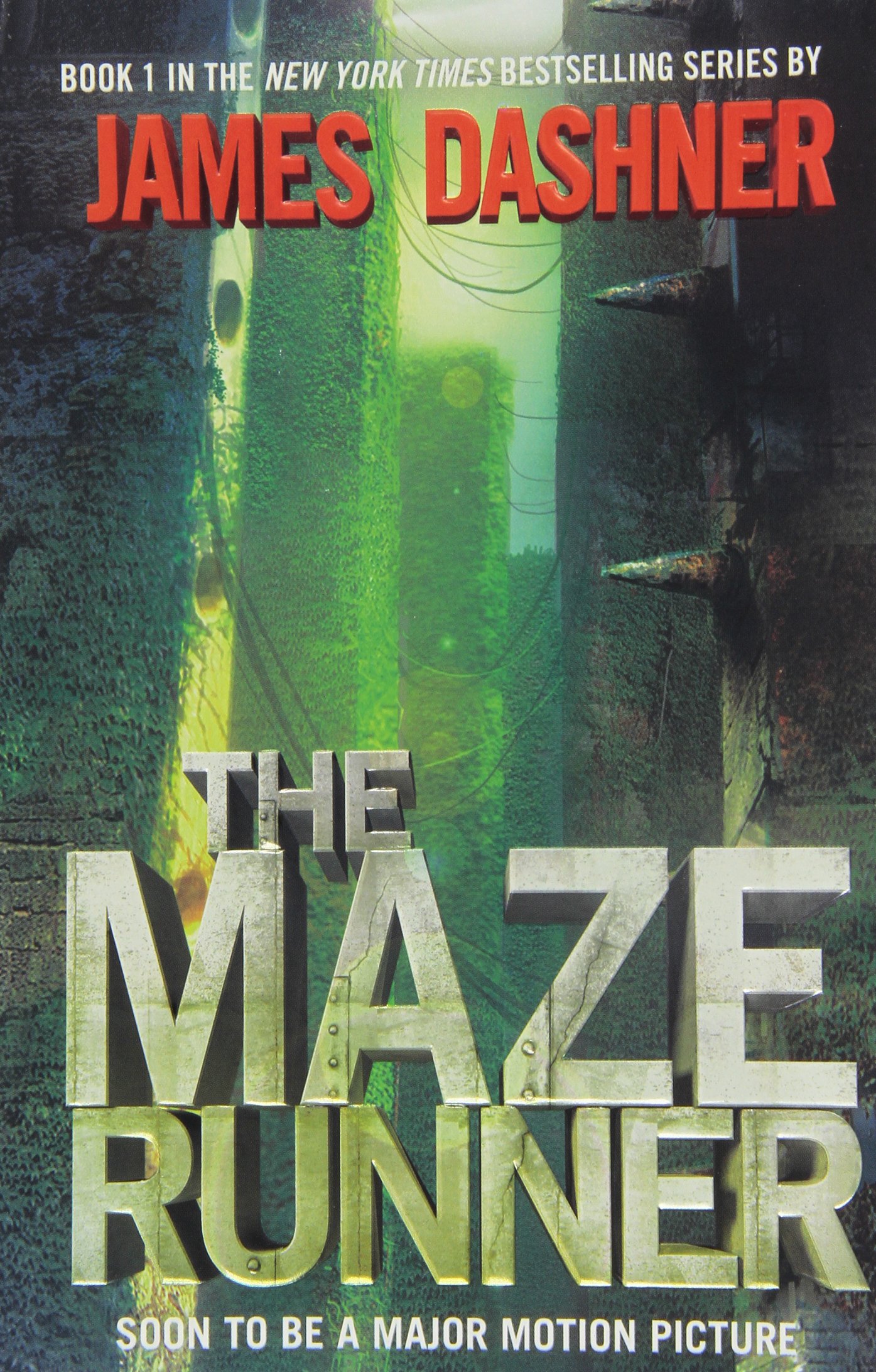
I have been excited to read The Maze Runner by James Dashner for a while now, despite being a little worn down with an over-saturation of young adult dystopians in the current market. But I suppose that isn't the book's fault. I digress.
It begins with Thomas being thrown into the midst of a make-shift, enclosed society run and inhabited only by teenage boys like himself. Every day, the walls around them open to reveal the opening of a giant maze that seems impossible to solve. A few of the boys are tasked with being "Maze Runners" and spend the daylight hours desperately trying to find patterns that could lead to a solution. At night, the doors close, the inner walls change, and terrifying monsters fill the maze. That's exciting enough, but Thomas' arrival has sparked changes in nearly everything - pushing the need to solve the maze from a daily job to the urgency of life or death.
My favorite part of the book is the brilliant world Dashner has imagined. It was a wonderful combination of creepy and intriguing. The closing of each chapter made me keep reading. When one question was finally answered, three more were raised. It was quite a gripping read. And I think/hope it will be a great movie as well!
I also appreciated that even though the arrival of Thomas started a domino effect of rule changes for this strange world, Dashner made sure that the other characters were proactively involved in the conflict. I was really worried that this would be a "waiting for the chosen one to save the day" situation (which I will be honest, sometimes it flirted with) but thankfully the other characters were intelligent and useful too! Yay!
The few things I struggled with while reading were the writing style and the shallow characters. BUT I don't want to be misunderstood - I think this can be explained by Dashner tailoring his style to his reader's target age group (around middle school, I would think) rather than him being a bad writer. I just found myself sifting through repetition or cliches while wanting to see rather than be told what a character was feeling. By the end of the book I really didn't feel very connected to the characters, but I very badly wanted to know more about them (looking at you, Newt and Minho)!
If you're looking for a quick read packed with action, I'd say go for it! I really enjoyed the first installment and am currently on the second thrill ride that is The Scorch Trials.
It begins with Thomas being thrown into the midst of a make-shift, enclosed society run and inhabited only by teenage boys like himself. Every day, the walls around them open to reveal the opening of a giant maze that seems impossible to solve. A few of the boys are tasked with being "Maze Runners" and spend the daylight hours desperately trying to find patterns that could lead to a solution. At night, the doors close, the inner walls change, and terrifying monsters fill the maze. That's exciting enough, but Thomas' arrival has sparked changes in nearly everything - pushing the need to solve the maze from a daily job to the urgency of life or death.
| Photo from Amazon.com |
My favorite part of the book is the brilliant world Dashner has imagined. It was a wonderful combination of creepy and intriguing. The closing of each chapter made me keep reading. When one question was finally answered, three more were raised. It was quite a gripping read. And I think/hope it will be a great movie as well!
I also appreciated that even though the arrival of Thomas started a domino effect of rule changes for this strange world, Dashner made sure that the other characters were proactively involved in the conflict. I was really worried that this would be a "waiting for the chosen one to save the day" situation (which I will be honest, sometimes it flirted with) but thankfully the other characters were intelligent and useful too! Yay!
The few things I struggled with while reading were the writing style and the shallow characters. BUT I don't want to be misunderstood - I think this can be explained by Dashner tailoring his style to his reader's target age group (around middle school, I would think) rather than him being a bad writer. I just found myself sifting through repetition or cliches while wanting to see rather than be told what a character was feeling. By the end of the book I really didn't feel very connected to the characters, but I very badly wanted to know more about them (looking at you, Newt and Minho)!
If you're looking for a quick read packed with action, I'd say go for it! I really enjoyed the first installment and am currently on the second thrill ride that is The Scorch Trials.
Monday, July 14, 2014
We Were Liars
I had heard great things about We Were Liars by E. Lockhart, but the tricky thing was that I had no idea what those "great things" were. Every review I read or heard was that I should just trust them because there are so few things you actually can say about the plot without spoiling the mystery. In fact, the tipping point for me giving in to the hype was reading the dust jacket flap copy that ended with:
"Read it.
And if anyone asks you how it ends,
just LIE."
Come on! Hats off to you editors and marketing gurus, cause I had another book bright with promise in my hand that was promptly set back on the shelf. (Sorry Beginning of Everything, I shall return to you someday).
So here's what I can say without giving anything away. Every summer, Cadence Sinclair lives on a private island off the Massachusetts coast with her grandparents, aunts, and cousins. If I describe them, I'm sure you'll hate them. Blond, athletic, beautiful, smart, rich, privileged, out of touch with reality and hard work. Initially I found the family delightfully disgusting, but thankfully E. Lockhart is awesome and gave them each a depth and complexity that makes them much more human.
All right, that's enough. Get ready for some vague teasers. There's an accident, and secret, and a search for truth amidst liars. I hate to be that person but you really have to read it; and until then try your hardest to stay away from spoilers (which somehow I managed to do?)!
I read this book in a few days - always a good sign - and I just...what. What.
After I turned the last page and everything was shockingly explained, I wanted to flip right back to the beginning and read it again to spot all the clues. Because, like every good mystery writer, the clues were right there for us readers, but I didn't guess it. And I loved being along for such a wild ride.
It's a great summer read with good pacing and an awesome plot. The writing is very poetic and at times abstract, which I know is not everyone's cup of tea but I enjoyed something different. Sometimes the first person narration left me wanting deeper glimpses into family interactions or even more emotional depth, but honestly I can't pinpoint exactly how I would change it and really that's a very small critique to a book I very much enjoyed.
"Read it.
And if anyone asks you how it ends,
just LIE."
Come on! Hats off to you editors and marketing gurus, cause I had another book bright with promise in my hand that was promptly set back on the shelf. (Sorry Beginning of Everything, I shall return to you someday).
So here's what I can say without giving anything away. Every summer, Cadence Sinclair lives on a private island off the Massachusetts coast with her grandparents, aunts, and cousins. If I describe them, I'm sure you'll hate them. Blond, athletic, beautiful, smart, rich, privileged, out of touch with reality and hard work. Initially I found the family delightfully disgusting, but thankfully E. Lockhart is awesome and gave them each a depth and complexity that makes them much more human.
All right, that's enough. Get ready for some vague teasers. There's an accident, and secret, and a search for truth amidst liars. I hate to be that person but you really have to read it; and until then try your hardest to stay away from spoilers (which somehow I managed to do?)!
I read this book in a few days - always a good sign - and I just...what. What.
After I turned the last page and everything was shockingly explained, I wanted to flip right back to the beginning and read it again to spot all the clues. Because, like every good mystery writer, the clues were right there for us readers, but I didn't guess it. And I loved being along for such a wild ride.
It's a great summer read with good pacing and an awesome plot. The writing is very poetic and at times abstract, which I know is not everyone's cup of tea but I enjoyed something different. Sometimes the first person narration left me wanting deeper glimpses into family interactions or even more emotional depth, but honestly I can't pinpoint exactly how I would change it and really that's a very small critique to a book I very much enjoyed.
Monday, July 7, 2014
Traveling with Pomegranates
After years of this book sitting on my shelf staring at me with so much promise and a beautiful cover, I finally gave Traveling with Pomegranates by Sue Monk Kidd and Ann Kidd Taylor a try. What better airplane reading than a travelogue? From what I had gathered about the book, it was a mother-daughter travel memoir through the sacred places of Greece, Turkey, and France. The mother, Sue is struggling with the acceptance of aging whilst watching her daughter take control of her adult life. Ann, her daughter, is fresh out of college and battling depression after being rejected from the graduate program and career she was hoping for. Oh, and as an extra bonus both are toying around the idea of writing a book - which was icing on the cake for me. Sounds promising, right?
I was excited to read this book for two reasons: the rich settings and a good, heartwarming mother-daughter story. I wish I could say that I got exactly what I was expecting, but unfortunately it wasn't even close. Each chapter focuses on the inward dilemmas of either the mother or the daughter, with brief acknowledgments of the beautiful vacation they are privileged to be on or a split second of wondering what the other family member is thinking. The majority of the book is Sue ferociously trying to find examples of the "divine within" and a desperate attempt to view what she calls "the female essence of God"; and Ann fearing losing her independence to write if she marries or has a "normal" job. Perhaps I found both journeys strange and distracting because they weren't relatable to me?
I feel almost guilty for not liking this book because these were real experiences, but it was so not as described. Even if it was as advertised, the lack of living in the moment and focusing on the people in your life in the here and now made it come off as, well, selfish. Most people would dream of their lifestyle: writing on your own schedule and taking frequent trips to experience ancient cultures with family, but both Sue and Ann seemed to find only misery within themselves for most of the book.
Now that I feel bad for being so negative, I will say that they are both talented writers. I enjoyed the way they described their experiences, I really did. I also loved watching the creative process for both women as they nurtured the ideas for their respective books. It was such an intimate thing to share, and anyone who has ever created anything could easily relate to the process. An incomplete idea, self-doubt, the relief and joy that comes from the small victories. I really did enjoy those chapters.
And it was also neat to see mother and daughter grow closer as they traveled, but I feel like it was such small sub-plot in the grand scheme of this book that I was left a little disappointed.
I was excited to read this book for two reasons: the rich settings and a good, heartwarming mother-daughter story. I wish I could say that I got exactly what I was expecting, but unfortunately it wasn't even close. Each chapter focuses on the inward dilemmas of either the mother or the daughter, with brief acknowledgments of the beautiful vacation they are privileged to be on or a split second of wondering what the other family member is thinking. The majority of the book is Sue ferociously trying to find examples of the "divine within" and a desperate attempt to view what she calls "the female essence of God"; and Ann fearing losing her independence to write if she marries or has a "normal" job. Perhaps I found both journeys strange and distracting because they weren't relatable to me?
I feel almost guilty for not liking this book because these were real experiences, but it was so not as described. Even if it was as advertised, the lack of living in the moment and focusing on the people in your life in the here and now made it come off as, well, selfish. Most people would dream of their lifestyle: writing on your own schedule and taking frequent trips to experience ancient cultures with family, but both Sue and Ann seemed to find only misery within themselves for most of the book.
Now that I feel bad for being so negative, I will say that they are both talented writers. I enjoyed the way they described their experiences, I really did. I also loved watching the creative process for both women as they nurtured the ideas for their respective books. It was such an intimate thing to share, and anyone who has ever created anything could easily relate to the process. An incomplete idea, self-doubt, the relief and joy that comes from the small victories. I really did enjoy those chapters.
And it was also neat to see mother and daughter grow closer as they traveled, but I feel like it was such small sub-plot in the grand scheme of this book that I was left a little disappointed.
Monday, June 23, 2014
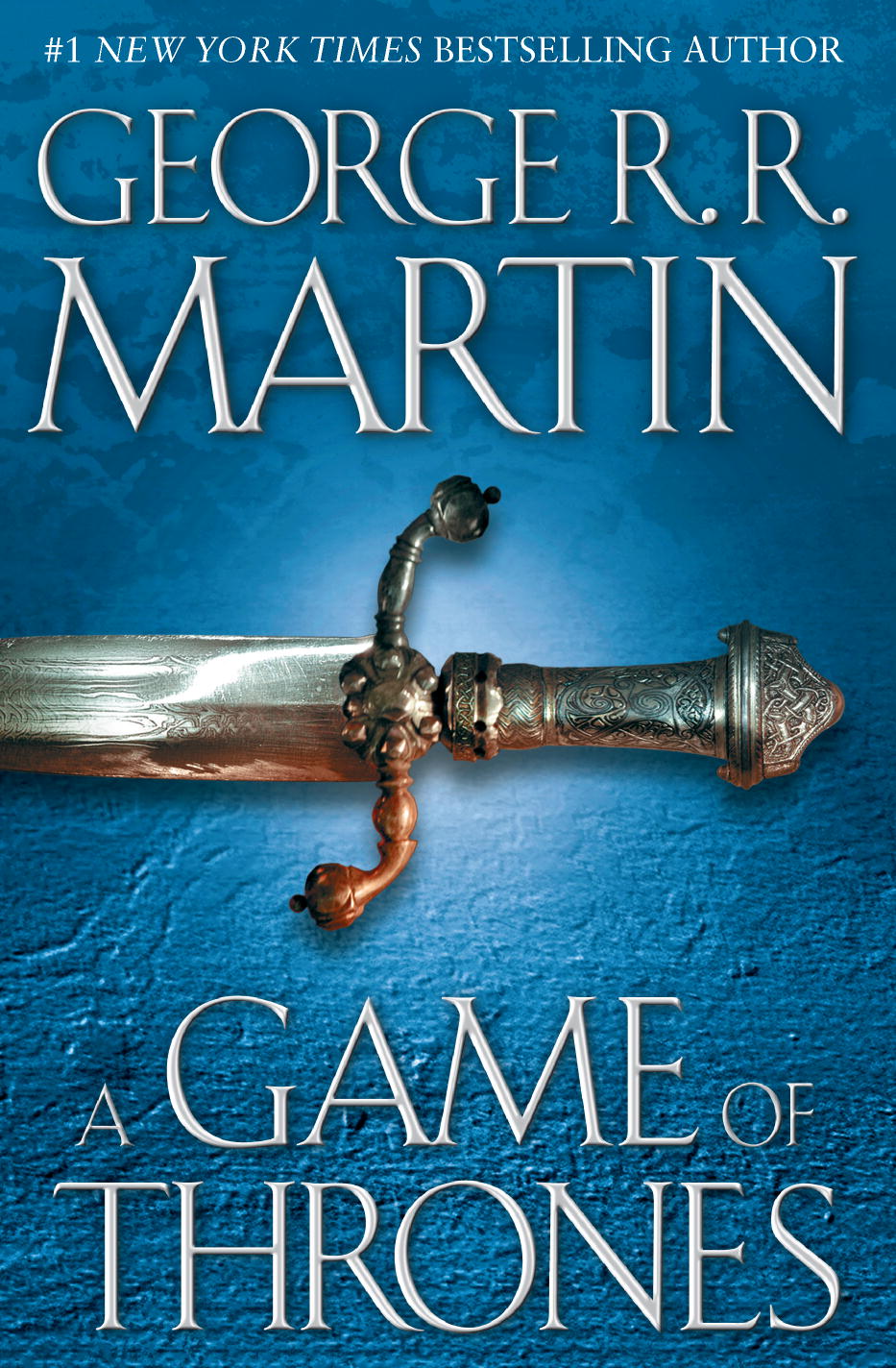
A Game of Thrones
Warning: this post contains vague, general spoilers.
The first book in A Song of Ice and Fire by George R.R. Martin, lays the ground rules for a truly magnificent series. You learn quickly to correct your thinking from the lazy "How on earth will our hero make their way out of this one? Cause I know he will." to the more realistic excitement and terror of "Wait, could they really die? Is this really happening? I THOUGHT YOU WERE PROTECTED BY MAGIC MAIN CHARACTER FORCEFIELDS."
A Game of Thrones is told from changing character perspectives with each chapter, which is one of my personal favorite ways to tell a story. Winters can last decades, rumors of lost heirs and dragon eggs are whispered about the kingdom of Westeros, a 700 foot wall keeps whatever may lurk in the wild, terrible north at bay, and murderous plots change loyalties and spark rivalries between the great houses of the unyielding Starks of the cold north, and the powerful Lannisters of King's Landing (and don't forget about the Baratheons, and the Targaryens, and...).
I always get a little hesitant when recommending this series to anyone because it is so graphic and explicit in pretty much every way you can think of. If you're bothered by explicit language, violence, or sexual content I would most likely steer you in another direction, and that's ok. I never thought I would be such a big fan of something that came with that disclaimer, but here's why:
Those things are not glorified. They are purposefully depicted as complicated and messy, and they have lasting consequences.
I don't feel like I'm exaggerating when I say Martin is a genius. Yes, all authors create worlds when they write. But Martin creates worlds that are large and complex enough to be real. He truly thinks of everything from filling out realistic social classes (rather than just having a fantasy world of royalty, knights, and peasants and calling it a day) to proving that there are rippling consequences to everything (which sometimes take several books to come to fruition). The amount of characters to keep track of is like keeping track of every person you've ever met in real life, but his writing is so brilliantly detailed that you will actually surprise yourself with how many you can keep straight.
I love how there are no "throw away" characters, either. Every innkeep, servant, and soldier on the battlefield has a name, a family, and a backstory. The scope of his focus extends further than what is typical in the fantasy genre - heroic men have very real weaknesses and emotions, and women and children are written with just as much strength and intelligence as the men - aka, they are also written as real people (gasp!). Families have realistic problems, and the characters you want so badly to label as villains have surprising humanity (with the exception of maybe a certain blond tyrant...).
And the plotting! I can easily say this is the most complex series I have ever read. It's not a simple good vs evil plot line, although there are reflections of that at times. I've noticed he has taken some inspiration from European history as well as Biblical accounts, which I think is always fun to notice as a reader. A Game of Thrones is packed with political intrigue and conspiracy where EVERYONE is a key piece in the game, and thankfully everyone has a realistic and for the most part understandable motivation to what they do, and somehow he managed to brilliantly weave them together to create a fantastic tapestry of ill omens, old magic, and fierce battles for the ultimate seat of power.
I realize that this seems like it could easily be a review for the entire series, and I can say that everything I said here rings true for the books to follow as well. The first book introduces the world with a bang, and somehow the momentum gains with each new installment. Future posts regarding the books to follow will be more specific, but just as a reader exploring the wide world of Westeros for the first time, it's hard not to just stand back in awe at the sheer scope and brilliance of this creation.
The first book in A Song of Ice and Fire by George R.R. Martin, lays the ground rules for a truly magnificent series. You learn quickly to correct your thinking from the lazy "How on earth will our hero make their way out of this one? Cause I know he will." to the more realistic excitement and terror of "Wait, could they really die? Is this really happening? I THOUGHT YOU WERE PROTECTED BY MAGIC MAIN CHARACTER FORCEFIELDS."
A Game of Thrones is told from changing character perspectives with each chapter, which is one of my personal favorite ways to tell a story. Winters can last decades, rumors of lost heirs and dragon eggs are whispered about the kingdom of Westeros, a 700 foot wall keeps whatever may lurk in the wild, terrible north at bay, and murderous plots change loyalties and spark rivalries between the great houses of the unyielding Starks of the cold north, and the powerful Lannisters of King's Landing (and don't forget about the Baratheons, and the Targaryens, and...).
I always get a little hesitant when recommending this series to anyone because it is so graphic and explicit in pretty much every way you can think of. If you're bothered by explicit language, violence, or sexual content I would most likely steer you in another direction, and that's ok. I never thought I would be such a big fan of something that came with that disclaimer, but here's why:
Those things are not glorified. They are purposefully depicted as complicated and messy, and they have lasting consequences.
| http://iceandfire.wikia.com/wiki/A_Game_of_Thrones |
I don't feel like I'm exaggerating when I say Martin is a genius. Yes, all authors create worlds when they write. But Martin creates worlds that are large and complex enough to be real. He truly thinks of everything from filling out realistic social classes (rather than just having a fantasy world of royalty, knights, and peasants and calling it a day) to proving that there are rippling consequences to everything (which sometimes take several books to come to fruition). The amount of characters to keep track of is like keeping track of every person you've ever met in real life, but his writing is so brilliantly detailed that you will actually surprise yourself with how many you can keep straight.
I love how there are no "throw away" characters, either. Every innkeep, servant, and soldier on the battlefield has a name, a family, and a backstory. The scope of his focus extends further than what is typical in the fantasy genre - heroic men have very real weaknesses and emotions, and women and children are written with just as much strength and intelligence as the men - aka, they are also written as real people (gasp!). Families have realistic problems, and the characters you want so badly to label as villains have surprising humanity (with the exception of maybe a certain blond tyrant...).
And the plotting! I can easily say this is the most complex series I have ever read. It's not a simple good vs evil plot line, although there are reflections of that at times. I've noticed he has taken some inspiration from European history as well as Biblical accounts, which I think is always fun to notice as a reader. A Game of Thrones is packed with political intrigue and conspiracy where EVERYONE is a key piece in the game, and thankfully everyone has a realistic and for the most part understandable motivation to what they do, and somehow he managed to brilliantly weave them together to create a fantastic tapestry of ill omens, old magic, and fierce battles for the ultimate seat of power.
I realize that this seems like it could easily be a review for the entire series, and I can say that everything I said here rings true for the books to follow as well. The first book introduces the world with a bang, and somehow the momentum gains with each new installment. Future posts regarding the books to follow will be more specific, but just as a reader exploring the wide world of Westeros for the first time, it's hard not to just stand back in awe at the sheer scope and brilliance of this creation.
Friday, June 20, 2014
The Fault in Our Stars
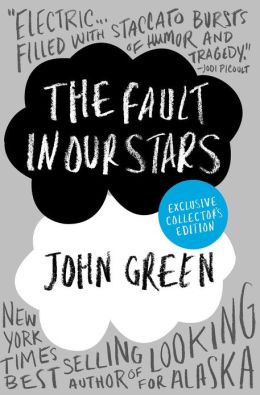
Why not start off with one of my new favorite books? I was late to the bandwagon with reading The Fault in Our Stars by John Green, and I will fully blame that on George R.R. Martin. Still, I completed reading TFiOS a couple of hours before the movie started showing, so I consider that a great accomplishment. (That many emotions in a few hours probably isn't healthy).
TFiOS follows its main character, 17-year-old Hazel Grace Lancaster, through the pain and boredom of everyday teenage life - with the added complication of trying new treatments for cancer. At the urging of her mother, she attends a cancer support group. There she meets Augustus Waters, and immediately they begin a friendship that (spoiler you should have seen coming) soon turns into love.
Yes, this is a book about cancer. But it is far from a typical "cancer-book", which has a totally different connotation. What I love about these characters is that they are not defined by their cancer. They don't let it become a defeated identity, instead it is just something that they happen to have and learning to deal with that makes them stronger.
In fact, one of the bigger sub-plots regards Hazel's obsession with the imagined sequel to her favorite book (whose characters beautifully reflect certain people in her own life, thereby showing us who she would be concerned for if her own story was cut short). Without success, Hazel has reached out to the author to have her questions answered. In an attempt to better understand his new crush, Augustus can't help but want answers too (well, that and impress Hazel, but who can blame him?)
If I tell you any more beyond this point, protecting you lovelies from an ocean of spoilers will be impossible. Just read it and watch Hazel and Augustus grow and have once-in-a-lifetime experiences together already, okay? Okay.
Now, I knew that this book is famous for making its readers cry but that rarely happens to me so I arrogantly accepted the challenge. I failed. Oh my goodness, did I fail. But here's the thing, and it's probably cheating since I read it from another reviewer, BUT IT'S SO TRUE: "This is a book that breaks your heart - not by wearing it down, but by making it bigger until it bursts" (The Atlantic).
I felt that stupid lump in my throat because of how full and strangely complete the lives of Hazel and Augustus are, when I had the assumption that they would be doomed to never experience the joys of life that non-cancer patients so easily can take for granted.
To top it off, Green is such a talented writer. This would have been a compelling story even if it was told matter-of-factly, but Green's metaphor-heavy descriptions and realistically imperfect, funny dialogue add such a robustness to the book that just makes it so complete.
I already want to reread it.
Subscribe to:
Posts (Atom)